[The following]
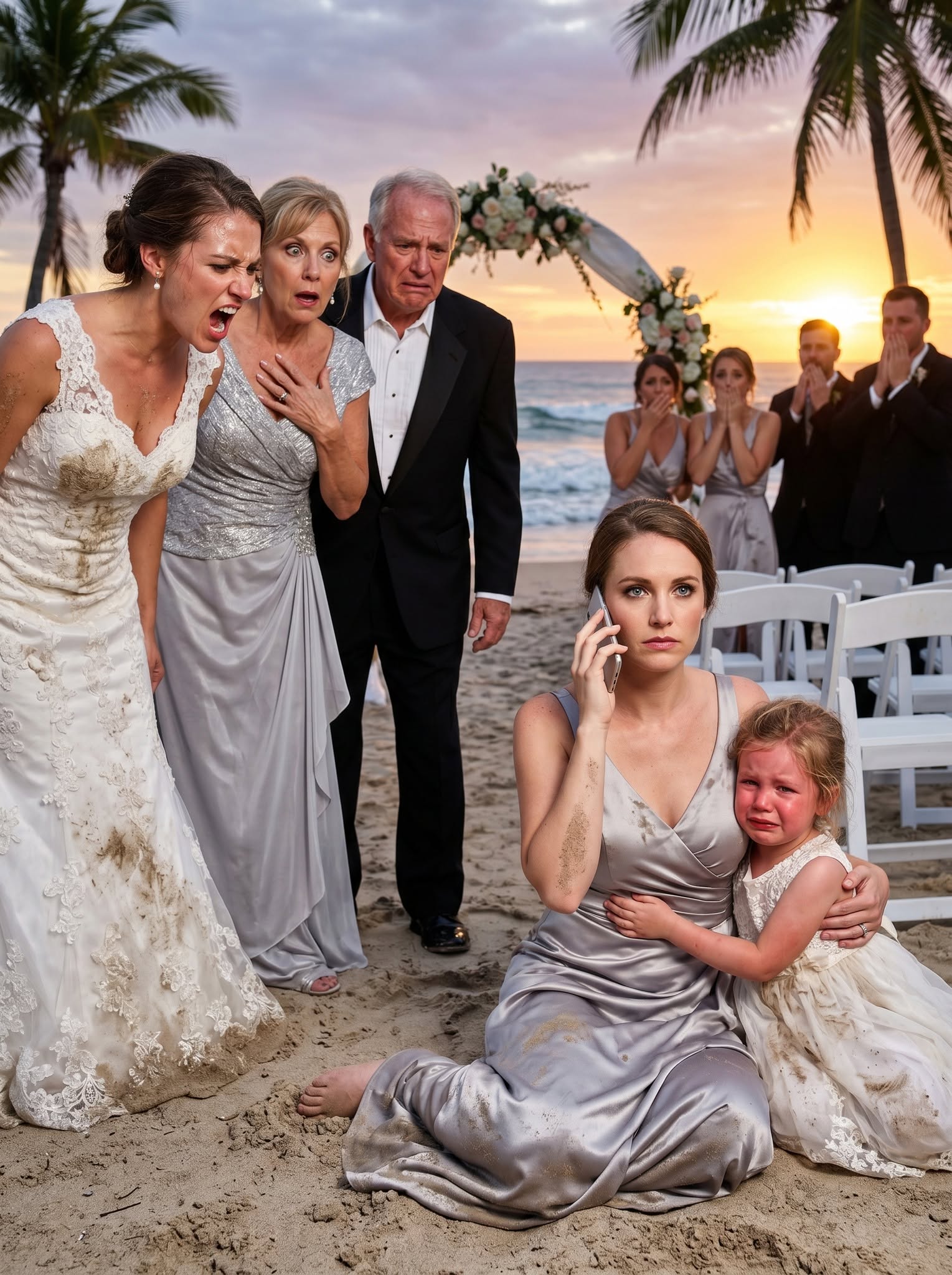
I looked at Ethan, who paled, admitting with a quiver in his voice that he could not pay for the wedding, that every detail he and Vanessa celebrated had been funded by me.
My mother blinked, my father went pale, and I let the truth linger in the air, heavy and undeniable.
“I own the resort,” I said calmly, letting each word strike with precision. “I paid for the island, the villas, the jets, the dress—everything.”
Vanessa’s eyes widened, disbelief mixing with fear, and for the first time in my life, I felt the balance shift from their control to mine.
I gestured to security. “My daughter needs immediate air evacuation. Remove them from all restricted property. No exceptions.”
Within minutes, a helicopter arrived, lifting Lily to safety as I followed, my heart heavy with relief and fury in equal measure.
Guests were ferried home quietly, unaware of the drama that had nearly shattered a child’s life, while my family stood stranded, powerless, and exposed in the ruins of entitlement and cruelty.
The lights of the island dimmed building by building, access revoked, privileges terminated, leaving them in darkness, confronted by the reality that no amount of wealth or status could shield them from consequences.
For the first time, nobody rushed to rescue them.
And for the first time, I realized that protecting my child mattered more than anything else—more than appearances, more than family, more than perfection.
Part 2
The helicopter blades sliced through the evening sky as Lily clung to me, her tiny body shaking from shock and fear, yet safe in my arms for the first time that night.
Paramedics worked swiftly, their hands gentle but efficient, stabilizing her arm, tending to the deep gash near her hairline, and murmuring reassurances I could barely hear through the roar of adrenaline and relief.
I kept my forehead pressed to hers, whispering words of comfort, promises of safety, and the fierce, unyielding love that no one in the world could take away.
Below us, the island sprawled like a kingdom suddenly abandoned, lights shutting off, fountains stilled, and security teams moving methodically to reclaim every inch from my oblivious family.
Vanessa sobbed uncontrollably, mascara streaking down her cheeks as Ethan clutched her wrist, both of them realizing too late that wealth alone could not shield them from truth.
My mother’s voice came through a distant phone line, pleading, begging, and hissing all at once, asking why I had never told them about my fortune, but my heart no longer responded to their fear of losing control.
I held Lily tighter, feeling the weight of years of neglect, insults, and emotional erasure press into me, fueling a determination that had been dormant for far too long.
Every luxury, every resort, every jet and villa, had been mine all along, yet I had spent it trying to buy love and respect from people incapable of gratitude.
The helicopter banked gently over the coast, the city lights of Manhattan glimmering in the distance, a reminder that this was home, this was safety, and here I could rebuild what had been broken.
Lily finally relaxed slightly, her small hand clutching mine again as she whispered, “Are they mad at us?”
I forced a small, genuine smile, one I had rarely allowed myself, and answered, “No, sweetie, they’re mad because they lost control, and that’s not something you need to carry.”
She nodded, her innocence shielding her from the depth of betrayal, and returned to coloring quietly on a napkin the paramedics had handed her, sketching two figures beneath a huge yellow sun.
I watched the picture, understanding it better than any words; it was just her and me, unbroken, unshaken, and untouched by the chaos that had engulfed those who claimed to love her.
For the first time in years, I felt a sense of peace I had longed for, a clarity that came not from wealth or power, but from the knowledge that I could protect my child, my family defined by choice rather than blood.
Back at the Manhattan penthouse, the city lights reflected off the polished surfaces, a silent affirmation that life continued, that we could heal, and that the world would not judge us for severing ties that were toxic.
The doctors assured me that Lily would recover fully, that the arm would heal, and the stitches would fade, but I knew the emotional scars ran deeper, etched by betrayal, cruelty, and the realization of who my real enemies were.
I allowed myself a rare moment to breathe, to let the adrenaline ebb, and to acknowledge the storm we had survived, the chaos that had revealed both the fragility and the resilience of those we loved.
The phone rang incessantly, each call a reminder of the family that had tried to harm us, each voicemail a testament to their shock, entitlement, and desperation for reconciliation.
I listened to one, my fingers trembling slightly as my mother’s voice pleaded for forgiveness and money, claiming family was all that mattered, as if her earlier violence had been nothing.
I blocked each number methodically, my attorneys ready to implement protective orders, child endangerment suits, and permanent bans from all properties under my ownership.
Vanessa’s screams and pleas were futile against the power I had always possessed, the very power I had tried to hide in vain hope that they would love me for who I was, not what I could give.
The island, once a stage for their entitlement, now stood empty, silent, and under the control of those who had been wronged, a lesson that wealth without integrity was meaningless.
Weeks passed, and Lily grew stronger, more confident, her small victories a constant reminder that resilience was born from love and protection, not approval from the unworthy.
We established routines that nurtured her, reinforced boundaries, and cultivated trust, teaching her that safety and respect were non-negotiable and that power could be wielded to protect, not just to impress.
I reflected on the years spent trying to earn my parents’ approval, realizing that nothing I could have done would have made them love me, and that the illusion of family had been a trap I finally broke free from.
Legal battles ensued, but I was prepared, fortified by evidence, witness statements, and a clear conscience, knowing that every claim they could make was dwarfed by their own actions and indiscretions.
Vanessa’s fiancé abandoned her at the airport, leaving her alone to face the consequences of her cruelty, and for the first time, the façade of her perfection cracked under the weight of reality.
Lily watched from the apartment window as the city lights twinkled below, pointing out the tiny boats in the harbor, asking questions about life, fairness, and why some people acted cruelly when they were meant to care.
I answered with honesty, choosing words carefully to guide her understanding without fear, emphasizing the importance of boundaries, kindness, and self-respect in a world that often celebrated superficiality.
We rebuilt our lives quietly, focusing on the things that mattered: health, love, emotional safety, and the unshakable bond between mother and daughter.
Every day became a testament to resilience, every moment an opportunity to teach Lily strength, compassion, and the understanding that wealth was a tool, not a shield, from human cruelty.
Evenings were spent reviewing security footage, notes from attorneys, and planning preventive measures for the future, ensuring that nothing could ever threaten our safety again.
I marveled at the irony that the very tools I had hidden for years—the control, the financial power, the authority—had become the instruments of protection I needed most.
Each night, I watched Lily sleep, her chest rising and falling with a calm rhythm, and felt the weight of responsibility transform into pride and unshakable love.
The city outside pulsed with life, unaware of the drama that had unfolded, the truths revealed, and the family bonds redefined not by blood, but by choice, courage, and survival.
I allowed myself a rare smile, knowing that for the first time in my life, I was not trying to prove myself to anyone but the people I truly loved.
And as the moon rose high above Manhattan, casting silver light across the penthouse, I knew we had survived a storm that had tested every ounce of patience, courage, and love we possessed.
The world outside would continue to judge, gossip, and speculate, but inside, the narrative had shifted completely: I was the protector, Lily was safe, and those who had harmed us had no power here.
In that quiet victory, I realized that the true wealth I had been seeking all along was not measured in dollars, yachts, or glittering villas, but in the unbreakable bond I shared with my daughter.
Part 3
Weeks turned into months, and the city’s hum became the backdrop to a life rebuilt, where Lily and I moved forward while my family remained ghosts in the ruins of their own making.
The emails and letters from my mother and father piled up, each more desperate than the last, offering apologies wrapped in self-interest and thinly veiled threats, but I no longer felt compelled to respond.
Vanessa’s calls went straight to voicemail, her tone frantic, pleading, and often accusatory, but I had learned that guilt could not undo years of cruelty or protect the child she had harmed.
Lily asked questions about the island, about the people who had hurt her, and I answered honestly, careful to shield her innocence while reinforcing lessons of boundaries and self-worth.
Every night, I checked her pink cast, cleaned her stitches, and told her stories not of wealth or grandeur, but of courage, resilience, and the quiet power of standing up for oneself.
The courtroom loomed on the horizon as I prepared protective orders, civil suits, and detailed evidence of the assault, knowing that justice required more than outrage—it required preparation and patience.
I watched my daughter grow stronger, more confident, her laughter returning like sunlight after a storm, and I felt the weight of years of worry begin to lift.
Vanessa’s desperation became more pronounced as legal notices arrived, her attempts at negotiation filled with entitlement and disbelief, as if money alone could erase violence.
Ethan had abandoned her completely, leaving her to confront the consequences she had ignored, and I couldn’t suppress a grim sense of poetic justice.
My parents’ pleas became frantic voicemail after voicemail, each more manipulative than the last, begging for forgiveness, access, and control, but I had discovered a new definition of family—one I could choose freely.
Lily learned to navigate her emotions, coloring, drawing, and asking questions, each moment a lesson in resilience and emotional literacy I had longed to impart.
The media remained unaware, as I ensured privacy and control, protecting Lily from the public spectacle my family had so eagerly sought.
I marveled at the irony that all the wealth, authority, and influence I had hidden for years had become the tools that safeguarded us from harm, rather than the means to impress or prove worth.
Every night, I reflected on the power of patience, preparation, and measured action, understanding that rage alone could not secure safety—it required strategy, foresight, and emotional control.
Vanessa’s attempts to salvage her reputation crumbled, each call, message, and plea met with silence or legal rebuttal, reinforcing that her actions had consequences she could not manipulate away.
My mother’s voice, once sharp and commanding, was reduced to desperation and fear, her attempts at intimidation falling flat against walls of law and resolve I had carefully constructed.
I watched Lily sleep each night, her breathing steady, her small body healing, and I allowed myself the rare luxury of gratitude, marveling at how far we had come in the aftermath of violence.
The attorneys advised carefully, preparing every document, briefing every security measure, and reinforcing the boundaries we had established, their professionalism a silent shield against familial chaos.
I allowed myself to feel pride, not in wealth, not in power, but in the quiet courage it had taken to protect my child and sever ties with those who had betrayed trust.
Lily began to smile more freely, her laughter echoing through the penthouse, a sound that had once seemed fragile but now felt resilient, unbreakable in its simplicity.
I reflected on the island, the fall, and the moment I had exercised ownership over both property and destiny, understanding that authority was meaningless without ethical action.
Vanessa’s isolation became complete; friends abandoned her as stories of her cruelty surfaced in whispers, and she faced the stark reality that no one could protect her from the consequences of her own choices.
Ethan’s absence was a constant reminder to Lily that people who abandoned responsibility could not be relied upon, and I emphasized the importance of trust and loyalty in choosing allies.
My parents remained barred from all properties, their access revoked permanently, a living lesson that abuse of power had limits even in families.
I watched Lily grow, her curiosity flourishing, her sense of justice sharpening, and I realized that our lives were now defined not by the past, but by the choices we made in the present.
The city became our playground, our refuge, a space where safety, love, and autonomy were guaranteed by boundaries I had finally asserted without apology.
Every night, I documented progress, both legal and personal, ensuring that any future threats could be countered decisively, a silent record of vigilance and foresight.
I marveled at how clarity had emerged from chaos, how the violence of one night had revealed truths long hidden, and how empowerment could arise from circumstances designed to harm.
Lily asked about forgiveness, about family, about why people behaved cruelly, and I explained that forgiveness was a gift one gave oneself, that protection sometimes required detachment, and that family was as much about choice as blood.
I watched the city lights shimmer off glass towers, a testament to human achievement, and understood that our safety and happiness were now constructed deliberately, intentionally, and uncompromisingly.
Every call, every letter from my family became less a plea and more a confirmation of their inability to change, their consistent prioritization of appearances over human decency.
I reflected on the lessons I had learned about trust, power, and love, realizing that wealth was only meaningful when used to protect those who mattered rather than impress those who never would.
Lily’s questions about justice, kindness, and courage became opportunities to teach resilience, empathy, and discernment, lessons I had longed to impart when the world had seemed unkind.
The penthouse became a sanctuary, every corner infused with care, safety, and an understanding that boundaries were not punitive, but protective.
I finally allowed myself to grieve—not for the fall, not for the betrayal, but for the years wasted seeking validation from those incapable of giving it.
Every night, I closed the blinds against the city, not hiding from the world, but creating a space where Lily and I could heal, flourish, and build memories untainted by fear.
The city moved on below, unaware of the family drama, the cruelty confronted, and the lessons quietly being internalized above in a penthouse of quiet strength.
Vanessa’s desperation, my parents’ pleas, Ethan’s abandonment—all became background noise, affirming the choice I had made to protect life, love, and dignity above all else.
I marveled at the strength I had discovered within myself, the capacity to act decisively, to wield authority justly, and to create a sanctuary for my daughter that no cruelty could breach.
Months passed, each day reinforcing the bond between Lily and me, each night affirming that family, trust, and protection were now defined by love, not blood or obligation.
The legal battles wound slowly toward resolution, their efforts to manipulate outcomes consistently blocked by evidence, professionalism, and the moral weight of their actions.
Lily began to express herself through art, writing, and storytelling, her small victories a constant reminder that nurture, guidance, and love could heal wounds inflicted by betrayal.
I watched her resilience grow, understanding that the true power of that night—the night of fear, violence, and revelation—had been the clarity it brought, the ability to act decisively and protect relentlessly.
Each evening, as the city lights blinked in the distance, I felt the quiet satisfaction of having reclaimed our lives, our safety, and our peace, the chaos of the island fading into memory.
Part 4
Spring arrived in Manhattan, soft light spilling across the penthouse, and Lily ran across the living room, her laughter a melody that had been missing for too long.
I watched her from the kitchen window, holding a cup of tea, marveling at how quickly resilience could blossom when nurtured with love, safety, and trust.
The legal battles had concluded, and my family’s access to every property, account, and asset had been permanently revoked, their attempts at manipulation and intimidation rendered powerless.
Vanessa had faded from our lives entirely, her pleas ignored, her entitlement met with silence and consequences she could neither escape nor control.
My parents remained estranged, their calls blocked, their messages unanswered, forced to confront the truth that their actions had alienated them completely.
Lily asked questions about them occasionally, her curiosity gentle, and I answered with honesty, teaching her that love could be chosen and that family was not defined by blood alone.
We celebrated small victories quietly—Lily’s arm healed fully, her confidence returning, and her artwork blossomed with color and imagination, each creation a testament to our survival and strength.
Evenings were spent together, cooking, reading, and telling stories, each moment reinforcing a bond that had been forged in the crucible of fear, courage, and love.
I reflected on the island, the fall, and the moment of clarity when I realized that ownership and authority were meaningless without the moral courage to protect those who depended on me.
The penthouse became our sanctuary, every corner infused with security, warmth, and a sense of control we had earned, a place where Lily could grow without fear and I could finally exhale.
The city outside moved on, indifferent to our drama, but within these walls, we had created a life defined by safety, empowerment, and the knowledge that we could survive any betrayal.
Lily began to explore her world with curiosity and confidence, asking questions about fairness, justice, and kindness, and I guided her with care, teaching discernment, empathy, and strength.
I found myself laughing more freely, no longer burdened by the weight of my family’s judgment, liberated by the realization that love, not approval, was the true measure of worth.
The scars of that night remained, a pink cast and stitches marking the memory of violence, but they were outweighed by the knowledge that we had endured and triumphed.
I considered the years wasted trying to earn affection from those incapable of it and felt no regret in severing ties, only relief that the truth had finally freed us.
The city lights reflected on the polished floors, twinkling like stars, a reminder that even in a world of chaos, there was clarity, protection, and hope.
We celebrated Lily’s small victories with quiet joy, acknowledging growth, resilience, and the strength it took to move forward unshaken by the past.
My phone remained silent from my estranged family, a symbol of boundaries enforced and power reclaimed, and I welcomed the peace that came with their absence.
I marveled at how wealth, power, and authority, once tools for approval, had transformed into instruments of protection, ensuring safety for the ones who truly mattered.
Lily’s questions about justice and cruelty became opportunities to teach compassion, self-respect, and the ability to stand firm against wrongdoing, lessons I had learned painfully myself.
The helicopter, the fall, the chaos—all were memories now, not anchors, but markers of the night we survived, a night that revealed the truth about people, loyalty, and courage.
I watched Lily sleep at night, her chest rising and falling steadily, and felt an overwhelming gratitude for the life we had reclaimed, the safety we had ensured, and the love that bound us.
Each morning, the sunlight streamed through the penthouse windows, bathing us in warmth and a sense of new beginnings, a constant reminder that every day was an opportunity to grow, heal, and thrive.
The legal consequences for my family were complete, their financial obligations enforced, and the emotional wounds they had caused addressed through protective measures, leaving no room for further harm.
Lily’s laughter returned fully, unburdened by fear or expectation, a sound that filled the apartment with hope, signaling resilience stronger than any obstacle we had faced.
I found satisfaction not in revenge but in justice, not in wealth but in the ability to act decisively to protect my child, and in the quiet moments of peace we shared.
Months passed, seasons changed, and yet the bond between Lily and me grew stronger with every shared meal, story, and whispered secret, unbroken by fear or betrayal.
The city remained vast, chaotic, and indifferent, but within the walls of our home, control, safety, and love were absolute, a testament to the choices we had made.
I reflected often on the lessons of trust, courage, and authority, teaching Lily that true strength lay in protecting the vulnerable, standing against cruelty, and choosing love over fear.
Vanessa and my parents faded entirely from our lives, their presence reduced to lessons in discernment, reminders of what boundaries were necessary and why power must be wielded responsibly.
Even the smallest moments, like Lily’s giggle over a spilled glass of juice or her careful drawing of the sun and two figures, became triumphs over fear, cruelty, and chaos.
I marveled at the clarity that had emerged from the storm, realizing that survival required not just action but understanding, empathy, and unwavering commitment to those who depended on you.
Our lives continued quietly, intentionally, defined by trust, safety, and the shared joy of mother and daughter, unbroken by betrayal, enriched by love, and protected by vigilance.
I had discovered that wealth and authority were only meaningful when used to protect and nurture, not to impress or appease the undeserving, and that lesson shaped every decision I made.
Lily learned to navigate the world with kindness, courage, and discernment, her questions and laughter reinforcing the knowledge that she was safe, loved, and empowered.
The city lights shone through the windows each evening, a quiet affirmation that life moved on, but within our home, we had created a world of safety, resilience, and joy.
I allowed myself to finally feel pride, not in riches, status, or control, but in the unbreakable bond we had forged, the lessons we had learned, and the life we had reclaimed from the chaos of betrayal.
Every night, as I watched Lily sleep, I knew that the storm we had endured had given us something far greater than wealth—it had given us clarity, safety, and a love untainted by fear or manipulation.
The past no longer held power over us, and I reveled in the knowledge that the choices I had made ensured that Lily would grow up knowing love, safety, and the courage to stand for herself.
Even the memories of that terrible night became markers of resilience, moments we survived, and proof that careful, decisive action could protect those most precious to us.
The city outside moved endlessly, unaware of the drama, the cruelty confronted, and the lives saved within the quiet sanctuary of our penthouse, but that didn’t matter.
We had created our own world, our own rules, our own family, defined not by blood or obligation, but by love, protection, and choice.
And as Lily colored one final sun for the day, I smiled, realizing that we had survived the unthinkable, grown stronger, and built a life where peace, joy, and safety would always prevail.
For the first time, I felt complete, not because of wealth, revenge, or power, but because of love—the one thing that had always mattered and the one thing that would always endure.
THE END