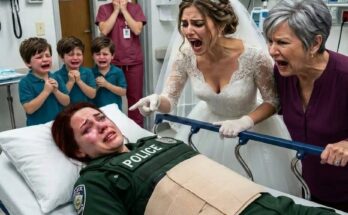
While I was lying in a Manhattan hospital bed with both of my kidneys failing, my body hooked to tubes, monitors, and machines that were keeping me alive by the hour, my parents walked into that room not with flowers, prayers, or even the smallest trace of fear in their eyes, but with legal documents demanding that I sign away my entire $250,000 life savings to my unemployed brother.
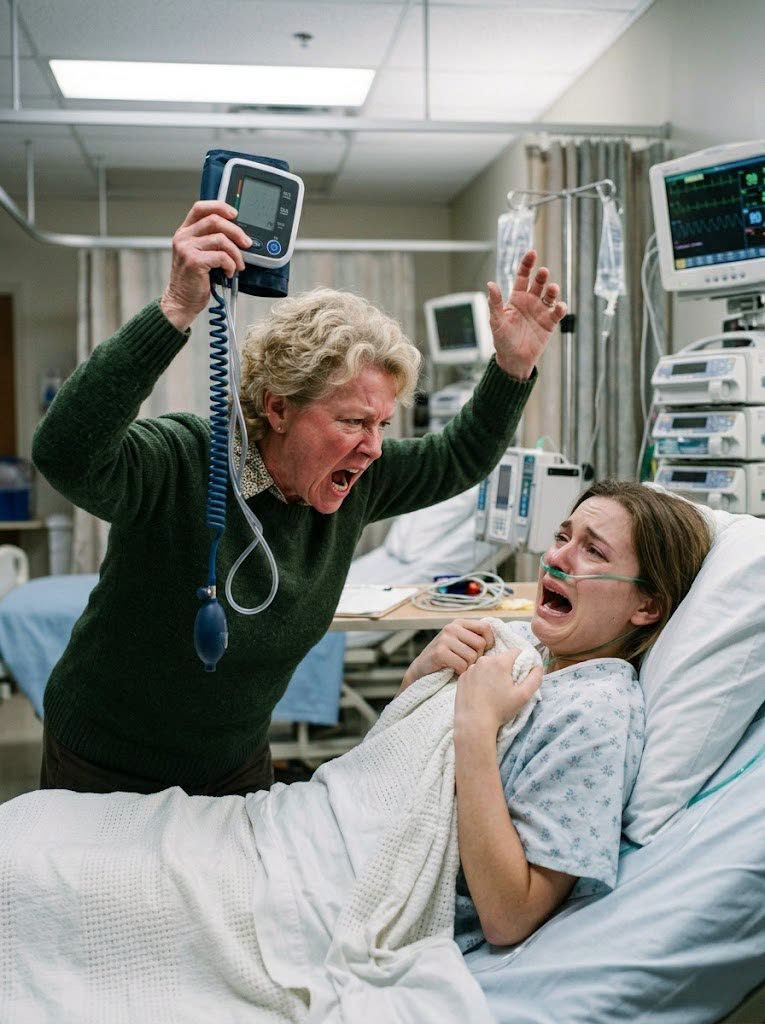
When I refused, when I finally said no after a lifetime of being their obedient daughter and their endless source of money, my mother ripped a heavy blood pressure monitor from the wall and slammed it into my head, convinced that pain, fear, and weakness would force me to surrender.
My name is Chloe, I am thirty-two years old, and for most of my adult life, I worked as a financial analyst in New York City, where everything moves fast, everything costs too much, and people are expected to smile politely while they destroy themselves trying to survive.
I built my career in a high-pressure financial firm where days began before sunrise and ended long after the city lights had swallowed the sky, and even though everyone around me saw a disciplined, successful woman in tailored blazers and practical heels, nobody saw the exhausted daughter who was quietly carrying an entire family on her back.
For as long as I could remember, my parents taught me that family loyalty meant sacrifice, and sacrifice meant giving until there was nothing left of yourself except the useful parts other people could spend.
In our house, love was never given freely; it was something I had to earn through achievements, obedience, money, and silence, and every good thing I accomplished was quickly turned into another resource for someone else to consume.
If I received a promotion, my mother did not congratulate me with pride in her voice; she asked whether that meant I could help more with the mortgage, because my father had been complaining about the rising payments again.
If I received a bonus, my father did not ask whether I planned to save it, invest it, or finally take a vacation; he reminded me that my younger brother Austin needed help with his car insurance because, according to them, he was “going through a difficult phase.”
Austin was twenty-six years old, charming when he needed to be, lazy when nobody was watching, and protected so aggressively by our parents that consequences had never once touched him long enough to teach him anything.
He was the golden child, the fragile genius, the misunderstood dreamer, the son who was always one lucky break away from greatness, while I was the practical daughter who was apparently born to fund that fantasy until my body gave out.
For five brutal years, I became the sole financial engine keeping my family’s comfortable life from collapsing, though nobody in that house ever admitted that the roof over their heads, the food in the refrigerator, and the lights glowing warmly at night existed because of me.
Every month, the mortgage on the family home came directly out of my checking account, followed by the utility bills, the internet, the groceries, the medical prescriptions, the insurance payments, and every emergency expense my parents decided was too stressful for them to handle.
Austin never noticed the weight of what I was doing, or maybe he noticed and simply enjoyed it, because he spent his days sleeping until noon, gaming online, buying clothes he could not afford, and talking about ambitious business ideas he never followed through on.
Whenever a job did not work out, which was usually within three weeks, my mother blamed the manager for being threatened by Austin’s potential, while my father blamed the company culture, the commute, the schedule, or anything except the son who refused to wake up on time.
Meanwhile, I was working eighty-hour weeks in a glass tower where the pressure never stopped, where emails arrived before dawn, where markets shifted in seconds, and where one mistake could undo months of careful analysis.
I ate meals from vending machines, slept in my office during late reporting cycles, and learned to ignore the dull ache in my lower back because I believed exhaustion was simply the price of being responsible.
My friends slowly stopped inviting me out, not because they stopped loving me, but because every answer from me became the same apologetic excuse about work, bills, family obligations, or being too drained to move.
I watched people my age fall in love, buy apartments, travel on long weekends, decorate homes, and build lives with space for joy, while I counted every dollar I had left after paying for adults who treated my help like a permanent utility.
Still, I held onto one secret dream with the stubbornness of a woman who had not yet realized she was drowning, and that dream lived inside a private savings account nobody in my family knew existed.
Through severe budgeting, quiet discipline, skipped vacations, secondhand furniture, modest clothes, and years of refusing myself almost every comfort, I saved exactly $250,000.
That money was not a luxury fund, and it was not a pile of cash waiting to rescue Austin from another self-created crisis; it was my future, my escape plan, my down payment on a quiet apartment where nobody could demand anything from me before I had even taken off my coat.
I kept the account hidden with electronic statements, private email access, and two-factor authentication, because somewhere deep inside me, long before I was brave enough to call my family what they were, I knew they would take it if they ever discovered it.
At the time, I thought secrecy was enough to protect me, and I told myself that as long as I kept the bills paid and kept everyone comfortable, they would leave my private dream alone.
What I did not understand was that people who see you as a resource never stop at what you willingly give; they eventually come for the parts of you that you try to save.
The morning everything changed was a rainy Tuesday, the kind of gray Manhattan morning where the streets shine like dark glass and office windows reflect a city that looks too cold to care about anyone inside it.
I was sitting at my desk, staring at market data across two monitors, when a headache hit me so suddenly and violently that I froze with one hand above the keyboard.
It was not stress, and it was not the kind of dull pain I had trained myself to ignore; it felt like something sharp had been driven behind my eyes, and within seconds the numbers on the screens blurred into streaks of white and blue.
My chest tightened, my hands went cold, and the office around me began to tilt as voices on the trading floor stretched into strange, distant sounds I could no longer understand.
I tried to reach for my phone, but my arm felt impossibly heavy, as though the bones inside it had turned to stone.
Someone shouted my name, a chair scraped the floor, and then my knees buckled so completely that I fell hard against the carpet, losing sight of the ceiling lights as darkness closed over me.
When I woke up, I was no longer in the office, and the first thing I saw was the harsh white glow of hospital lights hanging above me like a judgment.
An oxygen mask covered my face, multiple IV lines ran into my arm, a monitor beeped beside my bed, and every part of my body felt hollow, poisoned, and terrifyingly weak.
A doctor came in wearing blue scrubs and the expression of someone who had delivered bad news too many times to make it softer, no matter how carefully he chose his words.
He sat near my bed, lowered his voice, and explained that both of my kidneys were failing rapidly, that my body had been silently deteriorating for far longer than I had realized, and that I needed immediate aggressive treatment, continuous dialysis, and eventually a kidney transplant if I wanted a real chance to survive.
I stared at him through tears I could not stop, unable to understand how I had gone from analyzing reports in my office to being told that my own body had been shutting down while I was too busy keeping everyone else alive.
Fear moved through me like ice water, and beneath the terror was an even younger, more helpless feeling, the kind that makes a grown woman reach for her mother because some wounds make you a child again.
With shaking hands, I called Brenda, my mother, believing that whatever our problems were, whatever resentment lived beneath the surface, she would hear that her daughter might die and come running.
I was wrong in a way so complete that it still changed the temperature of my memories.
When I told her what the doctor had said, when I cried that both of my kidneys were failing and that I was scared, there was one brief silence on the line, so empty and cold that I should have known what was coming.
Then my mother exploded, not with grief, not with panic, not with a mother’s desperate love, but with rage so loud that the nurse adjusting my IV turned around in shock.
“How could you do this to us, Chloe?” she screamed, her voice cracking not from concern but from fury, as if my failing organs were a personal betrayal designed to inconvenience her household.
She demanded to know who would pay the mortgage if I lost my job, who would cover Austin’s car payments, who would keep the refrigerator stocked, who would manage everything now that I was apparently useless.
I lay there with a plastic mask pressed to my face, tears sliding into my hair, listening to my own mother call me selfish because my body had finally broken under the weight of the life they had built on top of me.
Before I could answer, before I could say that I was scared, that I needed her, that I had spent years paying for them while silently falling apart, she slammed the phone down.
I stared at the blank screen, certain she would call back after the shock passed, certain my father would call, certain Austin would at least send some careless message asking whether I was alive.
No one called, and within an hour, I realized my number had been blocked.
For the next several weeks, my family disappeared so completely that I had to accept a truth my heart had spent years refusing to see.
The people I had treated as my purpose did not come to the hospital, did not ask the doctors for updates, did not send food, did not send clothes, did not send comfort, and did not even pretend to care whether I survived.
My world shrank to the white walls of the hospital room, the slow drip of IV fluids, the mechanical rhythm of machines, the cold burn of dialysis, and the quiet kindness of nurses who treated me with more tenderness than my own blood ever had.
At first, the abandonment broke me in ways the illness had not, because physical pain is frightening, but realizing you were never loved outside your usefulness is a different kind of death.
I cried until my throat hurt, then cried until I had nothing left, and somewhere beneath that emptiness, something harder began to form.
Lying in that bed, unable to walk across the room without help, I began to understand that my loyalty had not made me noble; it had made me available to people who were perfectly willing to let me disappear once I stopped producing.
The old Chloe, the one who would have apologized for getting sick, started to die in that room, and she did not die in one dramatic instant but in small, quiet moments every time my phone stayed silent.
One night, after a nurse dimmed the lights and left me alone with the city glowing beyond the window, I opened my banking app and stared at the $250,000 balance I had protected for years.
For the first time, I did not see guilt attached to that number, and I did not imagine Austin’s needs, my parents’ bills, or the family home I had been trained to preserve at any cost.
I saw a door.
I whispered to myself that if I survived, that money would never again be used to buy comfort for people who had abandoned me in a hospital bed.
I did not know then how soon they would come back, or how violently they would reveal that their absence had not been shame, fear, or confusion.
It had been calculation.
Three weeks into my hospital stay, when I was still pale, weak, and dependent on medical staff for nearly everything, the door to my private room swung open without a knock.
For half a second, a pathetic piece of my heart lifted, because even after everything, some wounded part of me still wanted my parents to step inside with tears, apologies, and the kind of love I had waited my entire life to receive.
But Brenda and Arthur did not look sorry.
My mother’s mouth was tight with anger, my father’s jaw was hard with entitlement, and neither of them looked at the IV lines in my arm, the bruises from needles, or the tired shadows beneath my eyes.
They looked at me the way collectors look at a bill that is overdue.
Brenda strode to the side of my bed and dropped a stack of notarized wire transfer documents onto my blanket with a slap so sharp it made me flinch.
“Sign them now,” she said, as though she were ordering a disobedient employee, not speaking to a daughter fighting for her life.
I looked down at the papers, trying to process the legal language through the fog of painkillers and exhaustion, and then I saw the amount.
$250,000.
For a moment, the room went perfectly still, and the only sound I could hear was the heart monitor beside me, beeping steadily as if it were counting down the seconds before my old life ended.
“What is this?” I asked, though some part of me already knew.
Arthur stepped forward, his face flushed with the kind of moral outrage only selfish people can summon when denied something that never belonged to them.
“Austin found your financial statements,” he snapped, as if the crime was not the invasion of my privacy but my failure to disclose how much more they could take.
My mother folded her arms and stared down at me with open disgust, explaining that Austin needed the money to launch a luxury clothing brand, that this was finally his chance to become successful, and that it was cruel of me to hoard resources while my brother was trying to build a future.
I stared at her, stunned by the insanity of it, because my kidneys were failing, my hair had begun thinning from stress and treatment, and I could barely sit up without dizziness, yet they were standing over me demanding startup capital for Austin’s fantasy brand.
Arthur leaned closer and lowered his voice into something colder.
“You’re stuck in this bed, Chloe, and the doctors don’t even know when you’ll be normal again, so let’s be honest, you don’t need that money the way Austin does.”
It was such a grotesque thing to say that I almost laughed, but the sound that came out of me was closer to disbelief.
For thirty-two years, I had been trained to explain myself, soften my anger, and give reasons when I wanted something of my own, yet in that moment, clarity moved through me with a force stronger than fear.
“No,” I said, and the word felt unfamiliar in my mouth because I had used it so rarely with them.
Brenda blinked as if I had slapped her.
“This is my life savings,” I continued, my voice trembling at first before hardening into something steadier than I expected, “and I am lying here with both kidneys failing while you ask me to hand everything I have to Austin so he can pretend to be a businessman.”
My father’s face darkened, but I did not stop, because once the truth began coming out, it felt impossible to push it back down.
“I paid your mortgage, your utilities, your bills, Austin’s insurance, and every crisis you created for five years, but I am done being the bank account you call family.”
Brenda’s expression twisted with rage so intense that, for the first time, I saw the real woman beneath the mother costume.
“You selfish, ungrateful little brat,” she hissed, and the venom in her voice stripped the last remaining tenderness from the room.
I told them to get out.
It was not loud, and it was not dramatic, but it was final.
For a heartbeat, nobody moved, and then my mother’s hand shot toward the medical equipment mounted beside my bed.
I saw her fingers close around the heavy blood pressure monitor, saw the wires stretch and tear as she yanked it from the wall with a furious strength I did not know she had, and before my mind could fully understand what was happening, she lifted it above me.
The impact exploded against the side of my head with a burst of white pain so violent that the room seemed to split open.
I screamed, my hand flying to my temple as warm blood ran between my fingers, and for one terrible second, I could not tell whether I was falling, dying, or still trapped inside my own body.
“Brenda, stop,” I cried, using her name instead of Mom because whatever mother I had imagined having was gone.
I turned toward Arthur with pleading eyes, expecting instinct to overpower cruelty, expecting some buried fatherly reflex to make him protect me even from his own wife.
He did not move to help me.
Instead, he stepped toward the hospital door and positioned himself in front of its narrow window, blocking the view from the hallway while my mother stood over me with the monitor still in her hands.
“You brought this on yourself,” he said calmly, and that calmness frightened me more than Brenda’s rage because it meant he knew exactly what he was doing.
I stared at them through pain, tears, and blood, understanding that they were not out of control in the way people later claim to be when they want sympathy.
They had made a choice.
Brenda raised the monitor again, her face contorted into something almost unrecognizable, but this time I was ready.
What they did not know was that the moment they began shouting, before the first blow ever landed, my hand had slipped beneath the pillow and found the emergency panic button clipped near the side of the bed.
I had pressed it and held it down.
They thought illness had made me helpless, but sickness had also taught me to watch carefully, to anticipate danger, and to preserve whatever control I still had.
Before Brenda could strike again, the door burst open so hard it slammed against the wall, and three hospital security guards rushed into the room with the charge nurse right behind them.
Everything happened at once.
One guard grabbed Brenda’s wrist and forced the monitor from her hands, another restrained Arthur before he could step away from the door, and the nurse ran to my bedside with sterile gauze, pressing it firmly against the wound while telling me to keep breathing.
Brenda began screaming that I was unstable, that I had provoked her, that the medication was making me hysterical, but her voice had changed now because an audience had entered the room.
Arthur tried to straighten his shirt and speak with the polished authority he always used when he wanted strangers to think he was reasonable.
“This is a private family matter,” he said, but the security guard holding him against the wall did not loosen his grip.
Within minutes, the police arrived, their boots striking the hospital floor with a finality that made my mother stop screaming and start calculating.
Two NYPD officers entered the room, took in the torn wires, the broken equipment, the blood on the gauze, the legal documents scattered across my blanket, and the stunned medical staff surrounding us.
Arthur immediately lifted his hands in a show of cooperation, his voice smooth enough that a weaker version of me might have been afraid he could still control the story.
“Officer, our daughter is heavily medicated and confused,” he said, shaking his head with a performance of sorrow that would have fooled anyone who had not just watched him guard the door.
But I was done letting him make me small.
With one shaking hand, I pointed toward the small black dome camera in the upper corner of the room, the one installed for patient safety and staff protection.
“Check the internal camera,” I said, my voice rough and broken but clear enough for everyone to hear. “It recorded everything.”
The look that passed across my mother’s face was the first honest thing she had shown me that day.
Fear.
Not guilt, not sorrow, not horror over what she had done to her sick daughter, but fear that there was evidence she could not manipulate.
The officers went to the nurses’ station, and the waiting felt strange, almost peaceful, because for once, the truth was not trapped inside my mouth begging to be believed.
It was on video.
When the officers returned, their expressions had changed completely, and whatever polite distance they had maintained before was gone.
They had seen my mother rip medical equipment from the wall and strike a bedridden patient in the head, and they had seen my father block the door like an accomplice protecting an assault.
The handcuffs came out.
Brenda began sobbing the moment cold steel closed around her wrists, not because she understood what she had done, but because consequences had finally entered the room.
Arthur argued until the second officer cuffed him too, and then his voice dropped into stunned disbelief, as if he could not comprehend that fathers who help hurt their daughters do not get to walk away because they use calm words.
As they were marched into the hallway, doctors, nurses, patients, and visitors turned to stare, and Brenda’s humiliation curdled instantly back into rage.
She twisted her head toward me and screamed my name as if I were the one destroying the family.
I looked at her from the hospital bed, my head bandaged, my body weak, my heart monitor still beeping beside me, and felt nothing like the guilt she was trying to summon.
The old Chloe would have cried.
The new Chloe watched in silence.
By the time they were taken to the precinct, I had already asked the nurse to bring my laptop from the bedside cabinet.
My hands were still trembling, and my head throbbed beneath the dressing, but my mind had become perfectly clear in a way I had never experienced before.
For years, I had managed my family’s finances with the obedience of someone trying to prove love through usefulness, but now I approached those same accounts with the cold precision of the analyst I had become in boardrooms and market crises.
My parents had assumed that my illness would drain me financially, that treatment would make me desperate, and that my savings would become vulnerable.
They had forgotten, or more likely never bothered to know, that my job provided an elite corporate health insurance plan with extraordinary coverage for critical illness, hospitalization, dialysis, and transplant care.
My doctors had already worked with my insurer, and the major costs of my treatment were approved.
My life savings remained untouched.
I logged into my banking portal, and for the first time in years, I looked at every automatic payment not as a duty, but as a chain.
The mortgage transfer for the family home came first.
I clicked into the recurring payment settings, stared at the familiar amount that had left my account every month while they treated me like a servant, and canceled it permanently.
Then I shut down the utility payments, the internet bill, the shared phone plan, and every automatic transfer linked to their household expenses.
I canceled the credit cards Austin had been using for gas, takeout, clothes, subscription services, and every lazy indulgence he had disguised as a need.
After that, I emailed my attorney and instructed him to notify the lender that I would no longer be financially responsible for saving the property from default.
I was not cruel about it, and I did not rage in all capital letters or write some theatrical message meant to wound them; I simply removed myself from the machinery that had been grinding me down for half a decade.
That was the part they would hate most.
They could argue with emotion, but they could not argue with canceled payments.
The collapse began almost immediately.
Austin called from numbers I did not recognize, left voice messages full of panic, insults, threats, apologies, and wild promises that he would pay me back once his brand took off, though even in desperation he never sounded like a man prepared to work.
My parents, through relatives and lawyers, claimed I was destroying the family while they were facing criminal charges, as if their violence had been a misunderstanding and my refusal to keep funding them was the true betrayal.
I ignored all of it.
Each day in the hospital, I focused on surviving, and for the first time in my life, I let the medical team, not my family’s needs, decide what mattered.
Dialysis was exhausting, transplant evaluations were frightening, and some nights I woke from pain or panic convinced I could still hear Brenda screaming over the phone that I was useless.
But healing began quietly, not as some glorious transformation, but as a series of small refusals.
I refused to answer messages that blamed me.
I refused to ask whether Austin was okay.
I refused to feel responsible for a house I had paid for but never truly owned emotionally, because a home where love is conditional is only a building with furniture inside it.
Months passed, and my name slowly became less associated with crisis and more associated with recovery.
My firm, to its credit, supported me through medical leave, my colleagues sent careful messages that did not demand replies, and one senior manager told me that my job would be waiting when my doctors cleared me.
That simple professional decency nearly made me cry harder than my family’s cruelty, because I was not used to people offering support without immediately attaching a bill.
Eventually, a compatible kidney became available, and the transplant surgery that had once sounded like a distant, terrifying possibility became the procedure that saved my life.
The recovery was hard, painful, and humbling, but every step I took down the hospital corridor felt like walking away from the woman who had apologized for needing oxygen.
When I was finally discharged, I did not go back to my parents’ house.
I went to temporary housing near my follow-up care, and with the help of my attorney, financial advisor, and a real estate agent who knew nothing about my family drama and treated me like a normal buyer, I began searching for my own apartment.
The first time I stepped into the place that would become mine, sunlight poured through large windows and spread across pale floors, making the whole space feel clean, quiet, and untouched by anyone else’s demands.
It was not enormous, and it did not need to be.
It had a view of the New York skyline, enough room for a desk, a real bedroom door I could close, and a kitchen where nobody would stand over me asking what I had done for them lately.
I used my protected savings for the down payment, and when I signed those papers, my hand did not tremble.
Six months after the assault, I entered a New York State courtroom feeling healthier than I had in years, with a faint scar near my hairline and a calm inside me that no one in my family recognized.
Brenda and Arthur sat at the defense table in orange Department of Corrections jumpsuits, their wrists restrained, their arrogance stripped down to something small and gray.
They looked older, but not softer.
My mother kept glancing back at me with the wounded outrage of a woman who still believed consequences were things that happened to other people, while my father stared straight ahead, jaw clenched, pretending dignity could survive what the evidence was about to show.
When the judge entered, the room quieted, and the case unfolded with a brutal simplicity my parents could not explain away.
The hospital footage played on the courtroom screen.
There was my mother storming to my bedside with legal documents, there was my father standing behind her like a silent enforcer, there was my refusal, and then there was the monitor ripped from the wall and brought down against my head.
The room seemed to hold its breath as the video showed Arthur moving to block the door instead of helping me.
No speech from a defense attorney could make that look like confusion.
No mention of stress, medication, family tension, or misunderstanding could erase the image of a sick woman being attacked in a hospital bed while her father acted as lookout.
The judge’s face hardened as he addressed them, and when he spoke, his voice carried the disgust of someone who had seen too much cruelty but still found this kind especially vile.
He said that parenthood did not grant ownership, that illness did not make a victim available for financial exploitation, and that assaulting a hospitalized patient was not merely a family conflict but a profound violation of law, trust, and human decency.
Brenda was sentenced to four years in state prison for felony assault and domestic violence in a medical facility.
Arthur received one year in county jail for his active role, along with a fine that consumed what little cash they had left after months of legal fees and financial collapse.
My mother cried when the sentence was read, but I could tell those tears were for herself.
My father looked at me only once, and in his eyes I saw no apology, only accusation, as if my survival had been the betrayal he could never forgive.
Outside the courtroom, reporters from small local outlets lingered, drawn by the horror of the case, but I did not stop to speak.
I had already said everything that mattered under oath.
The rest of the punishment had happened outside the courtroom, in the ordinary, merciless world where unpaid bills become notices, notices become deadlines, and deadlines become locks changed by people who do not care about family excuses.
The house went into foreclosure after I stopped paying the mortgage, and the lender moved faster than my parents ever imagined possible.
A city marshal posted the eviction notice on the front door, and neighbors who had once admired Brenda’s manicured lawn and Arthur’s polished car watched cardboard boxes appear on the porch like evidence of a life built on someone else’s labor.
Austin took the fall hardest, not because he lost his family home, but because he lost the illusion that comfort was his birthright.
With no credit cards, no phone plan, no free gas, no luxury clothing fund, and no sister quietly absorbing every consequence, he discovered that rent, food, and transportation do not respond to charm.
He called me once from an unknown number and said I had ruined his future.
I told him, with a calm that surprised both of us, that I had simply stopped financing it.
He cursed until I hung up, and that was the last time I heard his voice.
A few weeks later, through a distant cousin who still believed gossip counted as concern, I learned that Austin had taken a minimum-wage job washing dishes and clearing tables at a diner in Queens, where he rented a cramped room with two strangers and complained that everyone looked down on him.
I did not celebrate his suffering, because real freedom does not require cheering at someone else’s humiliation.
But I did feel the quiet justice of knowing that the man who had been too special to work was finally meeting the world without my paycheck standing between him and reality.
After the sentencing, I stood on the courthouse steps while the correctional vans pulled away, and the air felt sharper than usual, as though the city itself had been washed clean by the long storm I had survived.
For thirty-two years, my chest had carried a constant pressure I thought was ambition, responsibility, or love, but standing there without anyone left to pay for, protect, excuse, or obey, I realized it had been fear.
Fear of being abandoned.
Fear of being called selfish.
Fear of discovering that if I stopped giving, there might be nothing left between me and my family at all.
Now I knew the truth, and the truth did not destroy me the way I once believed it would.
It freed me.
I hailed a cab and rode through Manhattan toward my apartment, watching people hurry along sidewalks with coffee cups, briefcases, shopping bags, umbrellas, and all the ordinary burdens of lives that belonged to them.
When I unlocked my own front door, sunlight filled the room, and for a moment I simply stood there listening to the silence.
No one shouted from another room.
No one demanded money.
No one treated my exhaustion like an inconvenience.
I walked to the window and looked out at the skyline, the same city that had nearly swallowed me whole and somehow also gave me the place where I rebuilt myself.
The scar near my hairline remained, and so did the medical reminders, the pill schedule, the follow-up appointments, and the knowledge that my body had limits I could never again ignore.
But I no longer saw those things as weakness.
They were proof that I had survived a life designed to use me up.
In time, I returned to work with boundaries so firm that even I sometimes marveled at them.
I no longer answered family emergencies that were not mine, no longer apologized for resting, no longer confused being needed with being loved, and no longer believed that blood had the right to poison everything it touched.
Some people only love the version of you they can control.
Some people call you selfish the moment you stop sacrificing yourself for their comfort.
Some people will stand over your hospital bed and still see a wallet before they see a human being.
I learned those lessons in the cruelest way possible, but I also learned that survival can become a doorway, justice can arrive wearing handcuffs, and the word no can sound like the first breath of a life that finally belongs to you.
Today, my money is mine, my home is mine, my body is healing, and my future is no longer held hostage by people who mistook my love for permission to destroy me.
The End